
How Do Manufacturers Turn an Automation Expo Demo Into a Measurable AI Pilot?
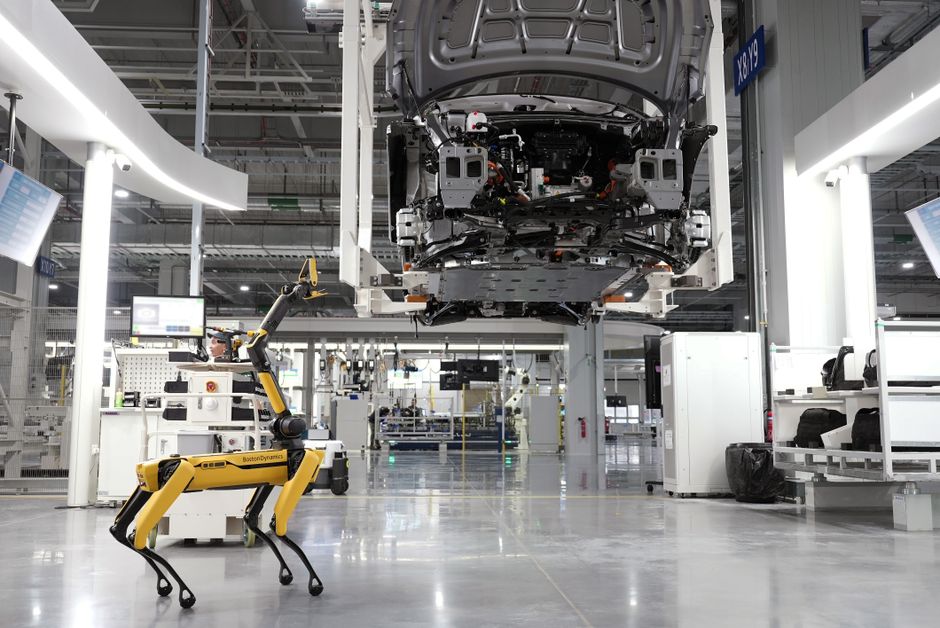
Manufacturers should treat an automation expo as the first gate, not the buying decision: arrive with one operating problem, test each vendor against data, safety, integration, support, and cost questions, then fund a limited pilot with a baseline, system-level measures, and a written go/no-go rule. A polished demo proves that a product can run. It does not prove it can improve your factory.
The floor is full of moving parts. The useful question is smaller: where does one part of your operation lose time, quality, or control?
That discipline matters for firms of every size. The National Strategy for Advanced Manufacturing states that small and medium-sized manufacturers make up 98% of U.S. manufacturing firms. A narrow evaluation gives a small team a way to compare serious offers without turning an expo visit into a collection of brochures.
What questions should I ask AI and robotics vendors at an automation expo?
Ask vendors to connect their product to one named problem, its operating limits, and the work needed to put it on your line. Begin with the failure, delay, defect, or task you want to change. Then ask the vendor to show the path from input to factory result.
The National Institute of Standards and Technology advises manufacturers to start with a focused problem such as downtime reduction or quality control. Its guidance is blunt: “Start small, but invest fully.” A vendor who cannot define the problem is selling a display, not a pilot.
| Area | Questions to ask at the booth | Evidence to request before a pilot |
|---|---|---|
| Use case | What exact production problem does this solve? Why is AI needed here? | A description of the intended system-level outcome and known limits. |
| Data and integration | Which inputs, sensors, network connections, computers, and programs are required? | A map of required inputs, historical-data needs, assumptions, and failure scenarios. |
| Performance | Which factory measures change if the product succeeds? | A plan to measure throughput, downtime prevented, production volume, or the relevant baseline. |
| Safety | Who performs the application risk assessment? What is included in the statement of work? | Documented hazard analysis, site-acceptance checks, and applicable safety compliance requirements. |
| Cybersecurity | Which third-party tools, models, and connections enter the system? How are they governed? | Controls that fit the manufacturer's existing cyber-risk program. |
| Support and price | What staffing, integration, monitoring, and maintenance work continues after installation? | A full scope that separates direct cost, staffing needs, and integration work. |
Safety questions belong near the start. OSHA defines an industrial robot system as more than the arm: it includes the end effector, controls, computers and programs, power sources, sensors, and communication interfaces. Each piece changes the application risk.
For a collaborative robot, ask the integrator how the hazard analysis and risk assessment will include the employer and workers. OSHA says integrators should conduct a comprehensive assessment for each application and buyers should include ANSI/RIA R15.06 and collaborative-robot compliance requirements in the statement of work, then verify them during site acceptance.
Do not confuse a cobot label with a safety plan. A shared space still needs a documented application assessment.
Cybersecurity deserves the same directness. The NIST Cybersecurity Framework 2.0 Manufacturing Profile describes a voluntary, risk-based approach organized around Govern, Identify, Protect, Detect, Respond, and Recover. Ask how the new tool fits those functions and how it supplements the standards already used in your plant.
How do I tell whether an industrial AI demo will work in my factory?
An industrial AI demo earns a pilot only when its inputs, assumptions, operating range, and output can be tested against your factory conditions. The demo should make its boundaries visible. A smooth result on a vendor screen is not a boundary.
Ask for a comparable application, then ask what differs between that application and yours. NIST calls for checking whether a model has the needed inputs, suitable training-data characteristics, stated assumptions, documented limitations, and known failure scenarios. These are not technical extras. They are the test of fit.
Run the demonstration backward. Start with the factory outcome you need, name the measure, then trace each required condition back to the data source, sensor, machine interface, and worker task. If any link remains unnamed, the pilot scope is not ready.
Machine vision, predictive maintenance, cobots, and edge analytics are useful categories to inspect at an expo. They are not interchangeable. A vision system needs relevant visual inputs. A maintenance system needs asset data and a way to compare failure or repair patterns. A cobot application needs its own risk assessment. An edge analytics tool still needs defined inputs and controls, even when analysis runs near the equipment.
Industrial robotics is established equipment, not a novelty category. The International Federation of Robotics reports 541,302 global industrial-robot installations in 2023 and an operational stock of 4,281,585 robots. The size of that installed base makes vendor comparison more demanding, not less. A buyer still needs proof for the specific cell, material, workpiece, cycle, and people involved.
Set a demo scorecard before the expo. Use plain pass, unresolved, or fail marks. The scorecard should cover the target problem, inputs, integration, safety evidence, cyber controls, support, cost scope, and the measurement plan. A vendor with unresolved essentials is not rejected forever. It is not ready for a pilot.
What data and integration are needed before starting an AI automation pilot?
Before a pilot starts, identify the required data, communications network, possible new sensors, historical records, system interfaces, owners, and corrective actions for out-of-limit performance. NIST says data readiness can require new sensors or historical data for initial training. The right question is not whether data exists somewhere. It is whether the pilot can receive the right data in a usable form.
Write a one-page pilot charter. It should name the use case, the asset or process, the data sources, the responsible people, the safety and cyber checks, the baseline period, the review dates, and the decision rule. This turns a promising demo into a controlled test.
Use system measures. NIST advises judging industrial AI by outcomes such as throughput, downtime prevented, and production volume rather than model accuracy or precision alone. For predictive maintenance, compare mean time between failure or repair before, after, and throughout the system's life, while reviewing best-case, worst-case, and most-likely scenarios.
Set acceptable limits before installation. The NIST AI Risk Management Framework Playbook calls for evaluation plans that show whether a system is fit for purpose, acceptable performance limits, and corrective actions when those limits are exceeded. It also calls for documenting pre-deployment and post-deployment performance, including existing and emergent risks.
That creates a clean go/no-go test. Go when the pilot meets its system measure within the agreed limits and the operating team can sustain the required controls. Pause or stop when the input quality, integration, safety evidence, cyber controls, or operating result falls outside the charter. No amount of model accuracy repairs a weak factory outcome.
Monitoring continues after the first result. NIST warns that data drift and model drift require regular reassessment of measures and controls across the AI lifecycle. The pilot is a measurement system as much as it is an automation project.
Frequently Asked Questions
How should a small manufacturer calculate robotics and AI ROI?
Calculate ROI against the operating problem selected for the pilot, not against a vendor's general promise. For downtime work, NIST recommends comparing mean time between failure or repair before, after, and throughout the life of the AI system, while also reviewing best-case, worst-case, and most-likely scenarios. Include direct costs, staffing needs, and system integrations in the decision because NIST identifies each as part of implementation.
Which industrial AI trends are worth evaluating now versus waiting on?
Evaluate tools tied to a known factory problem and supported by available data, network connections, safety controls, and a defined owner. AI-enabled machine vision, predictive maintenance, collaborative robots, and edge analytics are useful expo categories only when a vendor can show relevant inputs, limits, failure cases, and a practical integration path. Wait on broad, undefined deployments; NIST advises starting with a focused problem rather than a sweeping AI program.
Sources
- National Institute of Standards and Technology Manufacturing Extension Partnership
- National Institute of Standards and Technology AI Risk Management Framework Playbook
- Occupational Safety and Health Administration
- National Institute of Standards and Technology Cybersecurity Framework 2.0 Manufacturing Profile
- International Federation of Robotics, World Robotics 2024
- White House Office of Science and Technology Policy, National Strategy for Advanced Manufacturing