
How to Write an ATS-Optimized Resume in 2026
Workday processes roughly half of Fortune 500 applications before a human opens a single file. Over 98% of those companies run an applicant tracking system first, according to ResumeAI's State of ATS 2026 report. We keep treating that gate as a judgment call — as if someone decided we were unqualified. It is not a judgment call. It is a parsing problem wearing a hiring costume.
The median resume scores 62 out of 100 against its target job description. ResumeAdapter analyzed 10,000 scans in Q1 2026 and found 71.4% fell below the 75-point threshold most mid-size employers treat as the qualified line. Half of all resumes in Resumly's dataset of 138,848 files score under 70. The failure mode is rarely missing credentials. It is missing the exact vocabulary already sitting in the candidate's work history, phrased one synonym away from what the posting uses.
The Format Is Not a Design Choice
A resume is not a portfolio. It is a plain-text extraction target. Jobscan puts the constraint plainly: most ATS software cannot read information inside images, graphics, skill bars, or charts. Any text trapped in those elements gets scrambled or ignored entirely.
"Most ATS software cannot 'read' information contained within images, graphics, skill bars, or charts. Any text inside these elements will be scrambled or ignored."
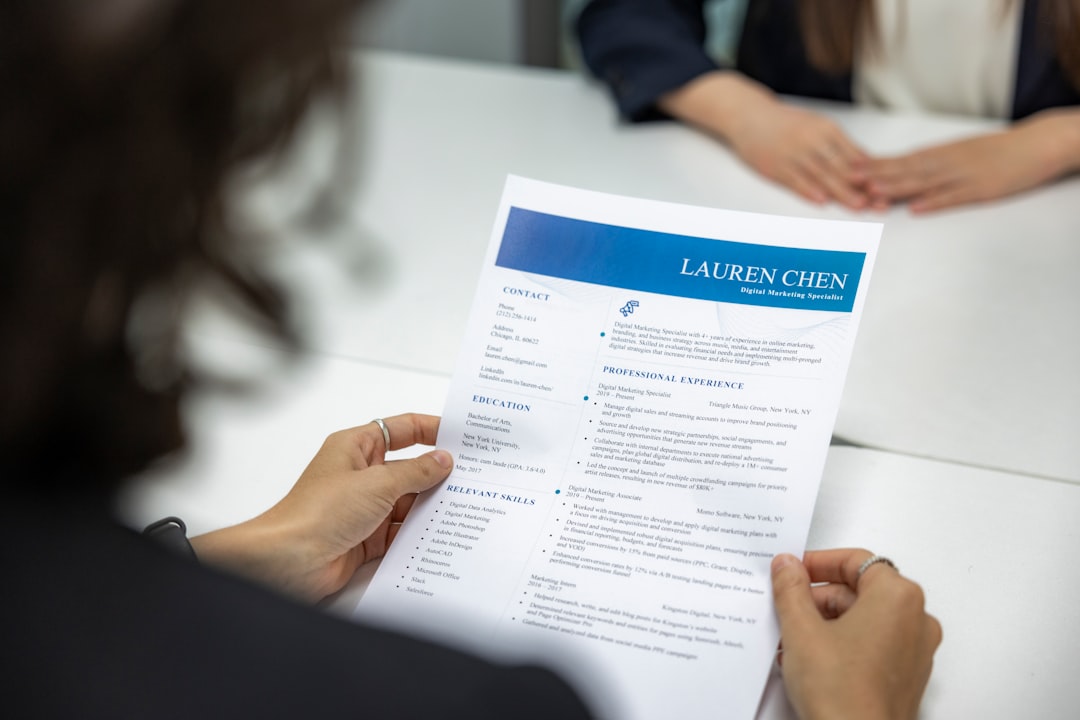
Single-column, reverse-chronological layout is the only format that survives every parser we can name. ResumeAdapter's data shows the same candidate content scores 18 points higher in one column than in two — with no other changes. Indeed recommends reverse-chronological order because it lists recent experience first in a sequence parsers expect. Two-column Canva templates, sidebar skills panels, tables, text boxes — these optimize for the six seconds a recruiter might spend on your file while guaranteeing the 100% of applications that pass through software first will read your job titles as gibberish.

Stick to web-safe fonts at readable sizes: Arial, Calibri, Garamond, Georgia, Times New Roman at 10–12pt for body text and 14–16pt for headings, per Jobscan's guidance. Do not put your name, email, or phone number in headers or footers — many systems skip those regions. Standard section labels matter: Work Experience, Education, Skills. Custom headings like "Where I've Made Impact" confuse parsers trained on decades of identical taxonomy.
File type splits the difference between modern and legacy stacks. PDF works reliably on Workday, Greenhouse, Lever, and iCIMS when exported as text-based PDF, ResumeAI notes. A .docx file remains the safest universal choice — Harvard's Mignone Center for Career Success recommends reviewing each application's instructions before submitting. Image-based PDFs from design tools are functionally photographs. The ATS sees a blank page with your name on it.
Keywords Are Translation, Not Decoration
Most ATS platforms rank candidates on a 70–80% keyword match against the posting. ResumeAI recommends aiming for 80+ to clear automated screening and 90+ to maximize human review odds. That threshold sounds mechanical because it is. The machine is not evaluating whether you can do the job. It is counting lexical overlap.
ResumeAdapter found 82% of rejected resumes contained fewer than half the required keywords — even when the experience matched. Adding 8–12 missing terms, integrated naturally into existing bullets, produced an average gain of 11.4 points. The fix is not stuffing. It is mirroring the job description's language for work you have already done.
Include both acronyms and spelled-out forms: "Search Engine Optimization (SEO)," "Master of Business Administration (MBA)." Harvard and Indeed both note parsers may match either form but rarely both unless you provide both. Read the posting three times. Highlight terms that repeat. Those repetitions are not stylistic tics. They are the scoring rubric.
Resumly's analysis of 138,848 resumes found 94.3% contain at least one overused buzzword — about 2.92 per file. Words like "motivated" and "quick learner" correlate with lower scores. Concrete outcome verbs — cutting, improving, delivered, automated — correlate with higher ones. The ATS does not reward self-description. It rewards evidence phrased in the employer's dialect.
Numbers or Silence
Thirty point six percent of resumes in Resumly's dataset contain zero quantified achievements. Not one percentage, dollar figure, or headcount across the entire document. Resumes with three or more quantified bullets averaged 71.8 out of 100 versus 64.9 for those with none — a 6.9-point gap, the largest single content effect in the dataset.
When exact figures are unavailable, estimate ranges defensible under scrutiny: "reduced processing time by roughly 20–30%," "managed a portfolio of 8–12 client accounts," "supported a team of approximately 15." The Google XYZ formula — "Accomplished X, measured by Y, by doing Z" — forces specificity even when Y is approximate. A range beats a vague superlative every time.
Senior candidates face a separate trap. ResumeAdapter reports rejection rates of 78.9% for workers with 10+ years, partly because resumes stretch to 3.2 pages of duty-focused prose. Two pages is standard for mid-to-senior roles, per Novorésumé's 2026 Resume Report. One page works for early-career applicants; 51.2% of American workers fit their careers on a page or less. Length is not prestige. Density of relevant, quantified evidence is.
The Fifteen-Minute Tailoring Loop
Twenty-four point four percent of American workers send the same resume to every opening, according to Novorésumé. They are three times more likely to finish a search with zero interview invitations — 20.5% versus 6.4%. Workers maintaining four or more resume versions averaged 4.2 interview invitations per search versus 2.0 for single-version applicants. Tailoring is not optional polish. It is the difference between visibility and oblivion.
A repeatable system: duplicate your master file. Paste the job description into a separate document. Circle the five to eight terms that appear more than once. Swap those into your professional summary [if you use one — a two-sentence summary with role title and core competencies helps parsers categorize you, though it is not mandatory], skills section, and the two most relevant experience bullets. Fifteen minutes. Not a rewrite — a vocabulary alignment pass.
Career changers face the same parsing logic with different source material. Lead with a summary that names the target role explicitly. Place transferable skills in a dedicated section using the posting's exact phrases. Reframe prior bullets through outcomes, not titles: "Managed vendor relationships for 12 contracts" translates to project management whether the industry was logistics or software. The ATS matches function words, not career narratives.
Forty-two point six percent of Americans used AI tools the last time they updated a resume; 27.1% submitted fully AI-generated documents with no edits. Manual tailoring yields a 17.5% interview rate per application in Novorésumé's data — competitive with AI-assisted approaches and far ahead of sending the same file everywhere. The tool does not matter. The translation does.
Recruiters spend six to seven seconds on initial review once your file clears the filter, ResumeAI confirms via Ladders eye-tracking data. Those seconds are not spent admiring layout. They scan for role fit. Give the software the keywords it counts. Give the human the numbers it trusts. Everything else is typography performing a job it was never hired for.