
What Kills Lawn Weeds Without Killing Grass, Pets, or Garden Plants?
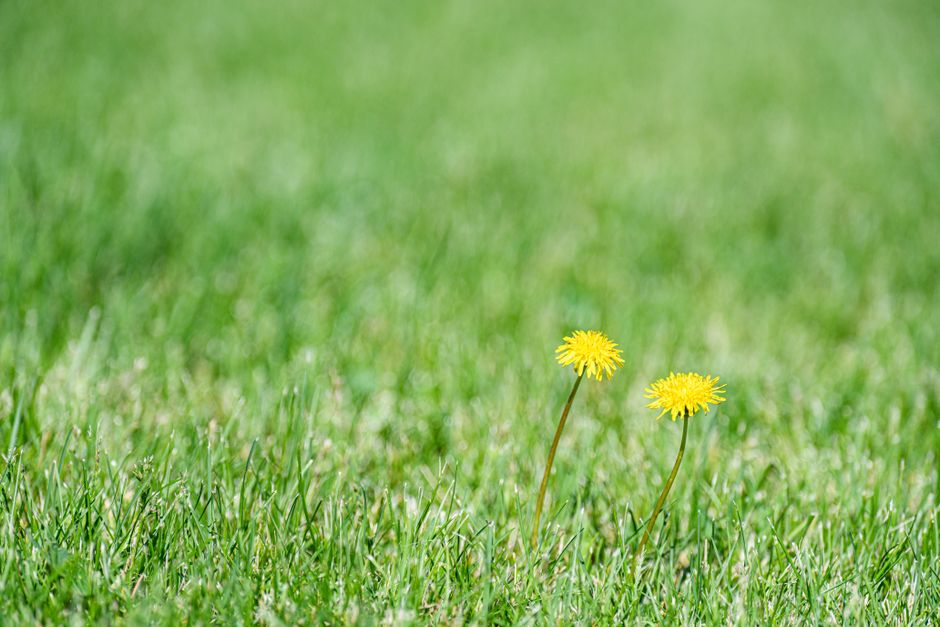
Choose the control by weed type and location: use a selective product labeled for the identified weed and your turf, hand-pull isolated plants, and reserve nonselective treatments for places where all vegetation can die. Keep spray away from edible beds and ornamentals, follow the label exactly, and keep people and pets out until the spray has dried.
A lawn is not one problem. Crabgrass is a summer annual grass. Dandelion is a perennial broadleaf. White clover is a perennial that spreads into mats. The right treatment starts with that distinction.
What kills weeds but not grass?
A selective herbicide labeled for both the weed and the turf kills weeds without damaging tolerant grass; a nonselective herbicide kills lawn grass along with the weed.
Penn State Extension draws the line clearly: selective herbicides control target weeds without harming tolerant turfgrass, while nonselective herbicides kill all vegetation. That makes identification the first tool, not a chore after the fact.
Use this decision order. First, decide whether the weed has broad leaves or grasslike blades. Next, decide whether it is an annual or a perennial. Then look at its place: open lawn, turf edge, crack, mulch bed, or beside food plants. A product that belongs in a driveway crack does not belong beside a tomato bed.
| What you see | Best control path | What to avoid |
|---|---|---|
| One or a few established weeds | Hand-pull, removing the root where practical | Broadcast treatment for a small problem |
| Broadleaf weeds in established turf | Use a selective broadleaf product labeled for the turf and weed | Nonselective treatment across the lawn |
| Crabgrass before it emerges | Use a labeled preemergence treatment at the proper soil-temperature window | Waiting until plants have seeded |
| Weeds beside ornamentals, vegetables, or fruit | Hand-pull or use only a product whose label permits that site | Spray drift and broad, fine-mist application |
Healthy turf also does part of the work. For crabgrass, the University of Minnesota Extension recommends mowing at least 3 inches high. Taller grass shades the soil and reduces crabgrass seed germination. Control is not only what comes from a bottle.
Will vinegar, salt, and dish soap kill weeds without hurting my lawn?
No. Vinegar-based treatments are nonselective contact herbicides, so contacted lawn grass can be injured or killed, and treated weeds can regrow.
Penn State Extension identifies vinegar, clove oil, and pelargonic acid as contact products that burn the tissue they touch. Burning a leaf is not the same as removing a perennial weed. The plant can grow again from surviving parts.
The supplied research does not establish a lawn-safe use for salt or dish soap. Public guidance in these sources does not support treating either as a selective lawn-weeding method. Do not turn a spot in turf into a test bed when the goal is intact grass.
Use a contact, nonselective approach only where bare ground is the desired end state and where nearby plants cannot be touched. In turf, choose a selective product only after matching the label to the weed, grass species, and application site.
Why did weed killer kill patches of my grass?
Weed killer kills grass when a nonselective product reaches it, when a selective product is used outside its label directions, or when heat, rain, overwatering, and drift turn an application into off-target exposure.
The EPA-approved label for a selective lawn herbicide containing 2,4-D, mecoprop-p, dicamba, and sulfentrazone warns that temperatures above 90 degrees F can damage grass. It also requires at least two weeks between applications, says not to spray when windy or as a fine mist, and says not to apply when rain is expected that day.
Drift has two forms: moving droplets and vapor movement. University of Minnesota Extension reports that drift is most likely in very windy conditions and in still air below 3 mph. Dicamba, 2,4-D, and triclopyr can volatilize hours or days after spraying, with hot, dry conditions increasing off-target movement.
Nearby peppers, tomatoes, eggplant, and beans are among the vegetables sensitive to growth-regulator herbicide drift. Keep the nozzle coarse rather than misty, avoid hot, dry, windy, or completely still weather, and do not spray toward a bed of wanted plants. A clean boundary is safer than a wide spray pattern.
The label is the rulebook. University of Minnesota Extension states that a pesticide label is a legal document covering use sites, rates, weather limits, drift reduction, protective equipment, and safety precautions. Read it before buying, then read it again before mixing.
How do I get rid of dandelions and clover across a large lawn?
For a large lawn, treat dandelions and clover with a selective broadleaf product labeled for those weeds, strengthen turf through proper mowing and fertility, and time clover treatment for fall.
Penn State Extension lists 2,4-D, MCPP, dicamba, clopyralid, and triclopyr among common selective postemergence ingredients for broadleaf lawn weeds. The exact product still has to list your turf species and target weed. A broadleaf label is not a blank check.
White clover has three rounded leaflets, often marked with a white crescent, plus white to light-pink globe-shaped flowers. It forms perennial mats 1 to 2 feet wide. The University of Minnesota Extension links clover with low nitrogen, compaction, or drought stress, and says dense turf with appropriate fertility helps reduce it.
Timing separates a clover plan from a dandelion plan. The same source says fall is the ideal time for a selective broadleaf herbicide on white clover and that spring applications are often ineffective. It also states that 2,4-D alone is ineffective for white clover; labels listing other suitable active ingredients, such as clopyralid, dicamba, MCPP, or triclopyr, offer a more targeted route when approved for the lawn.
For crabgrass, prevention comes earlier. Its seeds germinate after near-surface soil reaches 55 to 58 degrees F for several consecutive days, according to Penn State Extension. The University of Minnesota Extension advises applying labeled preemergence products before soil reaches about 55 degrees F and watering them in. One crabgrass plant can produce up to 150,000 seeds in a season. Timing is control.
Keep children, pets, garden plants, and turf in the same plan. The EPA label says not to allow people or pets into a treated area until the spray has dried, not to apply directly to them or through drift, and not to use the product on or near vegetables, fruits, or ornamentals. The safest method is the one that fits the site.
Frequently Asked Questions
What weed killer works on crabgrass versus broadleaf weeds?
Crabgrass is a grassy annual, so choose a product labeled for crabgrass and its growth stage. Penn State Extension lists selective postemergence ingredients for broadleaf lawn weeds, including 2,4-D, MCPP, dicamba, clopyralid, and triclopyr. Read the label to confirm that the product is approved for your turf species and target weed.
How long should I wait for rain after spraying weeds?
Wait for the drying or absorption period stated on the product label. University of Minnesota Extension advises following that label direction before rainfall, and the EPA-approved lawn-herbicide label cited here says not to apply when rain is expected that day. The label governs when the product can be used.
Are weed killers safe around vegetable beds and pets?
Safety depends on the product label, the application site, and preventing contact or drift. The EPA-approved lawn-herbicide label says people and pets must stay out of treated areas until sprays have dried, and it prohibits use on or near vegetables, fruits, or ornamentals. Read the label's safety, environmental-hazards, and produce-garden directions before use.
Weeds are not one foe. Grass is not one surface. Name the plant, protect the place, and let the label set the limit.
Sources
- Penn State Extension: Weed Management in Turf
- University of Minnesota Extension: Crabgrass
- University of Minnesota Extension: Dutch White Clover
- University of Minnesota Extension: Herbicide Injury on Garden Plants
- University of Minnesota Extension: Pesticide Smart
- U.S. Environmental Protection Agency: Selective Lawn Herbicide Label