
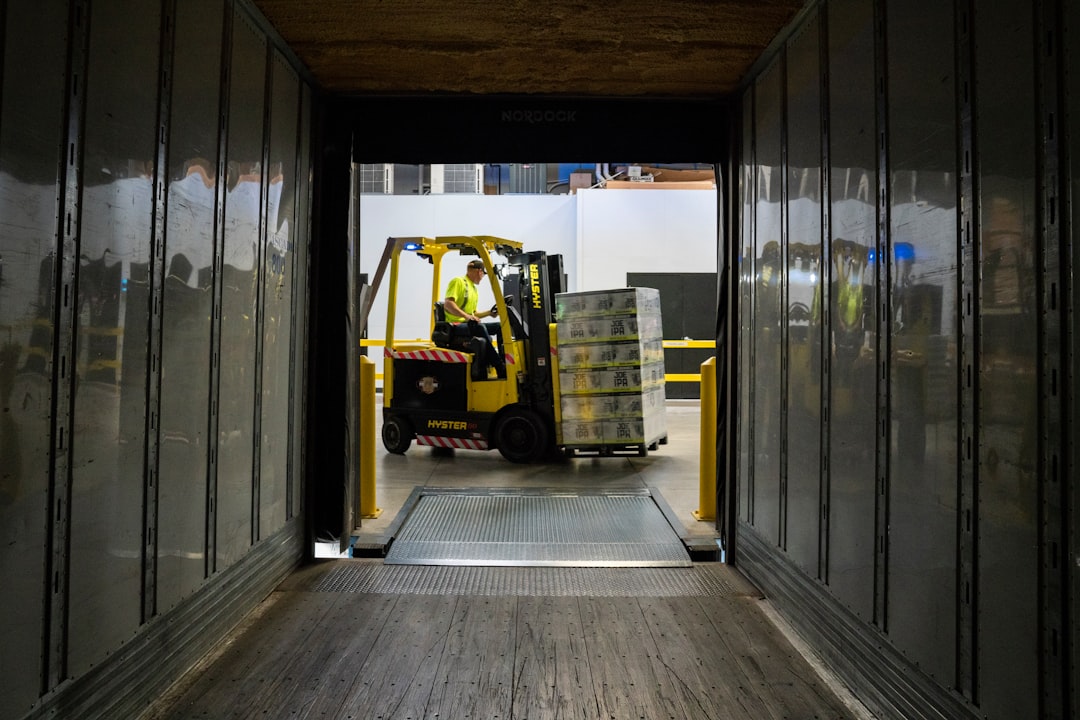
Forklift Certification Is Not a License — It's a Career
We call it a forklift license the way we call a parking ticket a negotiation — because the label feels official and the reality is employer-owned. According to OccuPros, no state DMV, no federal agency, and no third-party board issues a license to operate a powered industrial truck. What exists instead is employer-provided certification under OSHA 29 CFR 1910.178 — a paper trail with your name, training date, evaluation date, and trainer identity. The distinction matters: we are not buying permission from the government. We are proving competence to whoever signs the paycheck and absorbs the liability when a 9,000-pound counterbalance misjudges a corner.
That liability is not abstract. Forklifts figure in roughly 85 worker deaths and 34,900 serious injuries per year in the United States, per OccuPros. OSHA fines for untrained operators run up to $16,550 per serious violation and $165,514 per willful violation. The agency does not issue credentials — it punishes employers who skip them. As OSHA's Powered Industrial Trucks eTool states plainly: "Only trained and competent operators shall be permitted to operate a powered industrial truck. All powered industrial truck operators must be trained and certified by their organizations."
What Certification Actually Requires
Forklift certification is not a degree, not a DMV test, and not a single online module. The Bureau of Labor Statistics lists no formal educational credential for material moving machine operators and notes on-the-job training typically lasts less than a month for industrial truck operators. OSHA demands three components woven together: formal instruction, practical training, and workplace evaluation before anyone touches controls in production.
Formal instruction covers truck types, load stability, pedestrian hazards, and the regulatory frame. Practical training puts hands on levers — demonstrations by a qualified trainer, exercises by the trainee. The evaluation happens where the work actually occurs: narrow aisles, uneven floors, real pallets stacked three high. According to OSHA, each forklift class requires its own practical training. A counterbalance certificate does not authorize a reach truck or rough-terrain unit. Switch equipment without retraining and the credential is fiction.
Duration compresses further than most applicants expect. Indeed Flex puts typical completion at 4–8 hours. OccuPros estimates one full day — six to eight hours including classroom and hands-on evaluation. Cost splits along the same fault line: $150–$300 for full in-person programs, $50–$150 for online classroom portions that deliberately exclude the mandatory practical component, per OccuPros and Safety Evolution. Online theory satisfies the lecture requirement; it cannot satisfy OSHA's evaluation mandate. Employers who hire untrained workers often sponsor training because the alternative is a fine that dwarfs a $200 course.
The Hourly Spread We Ignore at Entry
We ask what forklift operators earn per hour as if the occupation were a flat rate. It is a percentile distribution. The BLS reported a median annual wage of $46,390 for industrial truck and tractor operators in May 2024 — roughly $22.30 per hour at the midpoint. The lowest 10% earned under $36,500; the highest 10% cleared $63,240. Earlier OEWS data from May 2023 placed the median at $21.38 hourly ($44,470 annually), with the 90th percentile at $28.78.
PayScale surveys tell a tighter story for 2026: average $19.21 across 2,536 profiles, entry-level under one year at $17.20, early career at $18.41, top reported hourly rates near $23.88. Certification itself adds $3–$5 per hour over general warehouse labor, according to Indeed Flex — not because the paper is magic, but because certified operators reduce insurance exposure and throughput delays.
Shift selection and multi-class credentials widen the gap without changing job titles. Third-shift premiums, cold-storage differentials, and hazmat-adjacent warehouses pay above ambient retail distribution. Operators certified on reach trucks, order pickers, and rough-terrain units command higher rates than single-class counterbalance holders because each additional class represents retraining cost the employer avoids by hiring someone already evaluated.
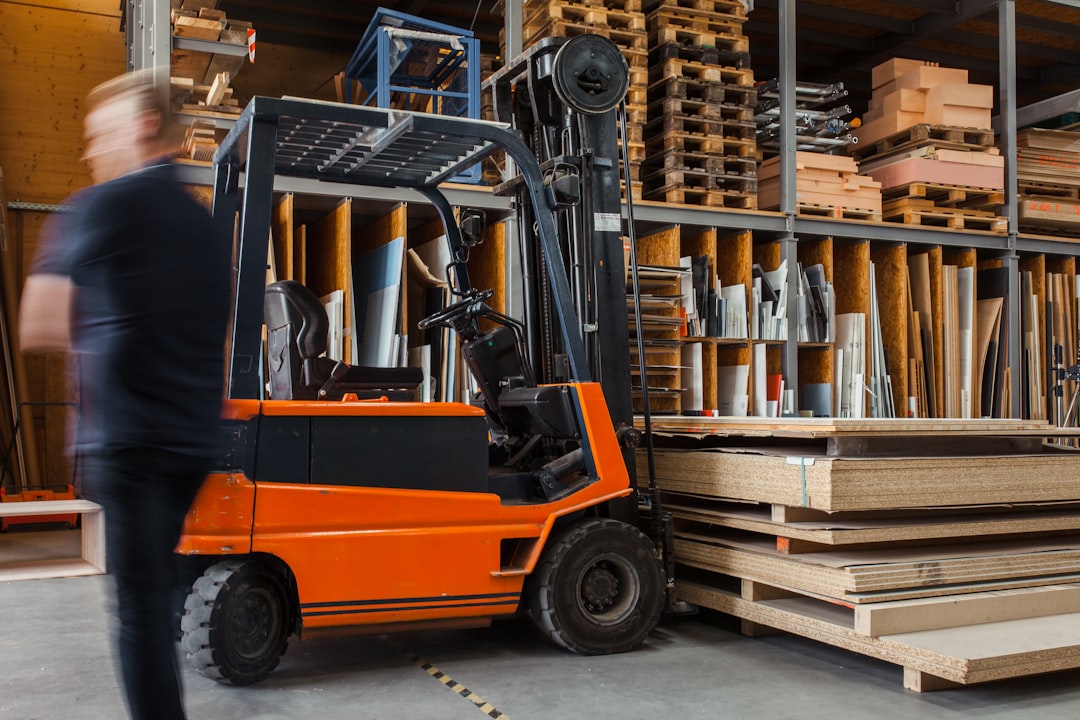
Breaking In Without a Resume Line
No experience is the default, not the exception. The BLS projects 83,200 annual openings for material moving machine operators through 2034 — replacement demand from turnover, not expansion alone. ResumeGeni estimates roughly 76,400 openings annually in the forklift track specifically, with over 805,000 workers already in the field. We enter through warehouse associate roles, temp staffing pipelines, or employers who train on hire. Age floor is 18. Physical requirements vary by site but rarely require credentials beyond certification.
Self-funded certification before applying can shorten the hiring cycle — a $150–$500 investment that signals we understand the liability frame employers operate inside. Train-the-trainer programs ($500–$1,500 initial, then $50–$100 per additional operator per Safety Evolution) make economic sense at roughly 8–12 operators; below that threshold, third-party or employer-sponsored training wins on arithmetic alone.
The Ladder From Seat to Supervision
Forklift operating is not a terminal job — it is a floor-level entry into logistics management for people who treat equipment class the way trades treat journeyman tickets. ResumeGeni maps the progression: lead operator, warehouse supervisor ($50,000–$65,000), operations manager ($60,000–$85,000+), typically five to eight years if we accumulate cross-training and shift leadership. The salary spread between 10th and 90th percentiles runs roughly 68% — from $36,500 entry territory toward $61,540 at the specialist end.
Recertification arrives on a three-year clock, not a lifetime stamp. OSHA requires performance evaluation at least once every three years, with refresher training triggered by accidents, near-misses, unsafe operation, or assignment to different truck types. Indeed Flex notes employer-dependent validity but the regulatory floor is evaluation, not nostalgia for a card printed in 2021.
We mistook certification for a license because licenses feel portable and careers feel fixed. Forklift work is neither — it is a competence record tied to employers, equipment classes, and a wage band wide enough to reward the operators who treat every recertification cycle as a raise negotiation. Pick up the evaluation form before the expiration date does.