

Medical Coder Without a Degree: What the Numbers Say
The hospital billing department does not ask for your transcript. It asks whether you can translate a surgeon's operative note into ICD-10-CM and CPT codes that Medicare will accept without sending the claim back. We have spent decades treating a four-year degree as the gate — and the gate was always somewhere else.
According to the Bureau of Labor Statistics, medical records specialists typically need a postsecondary certificate to enter the occupation, although some qualify with a high school diploma alone. Certification may be required or preferred. The degree is optional infrastructure. The credential is the admission ticket.
The Degree Is a Mislabel
Can we become a medical coder without a college degree? Yes — and the federal occupational data says so plainly. The BLS lists typical entry-level education as a postsecondary nondegree award, not a bachelor's. O*NET Online classifies the role under Job Zone Three: medium preparation needed, meaning vocational training, on-the-job experience, or an associate's degree — not a mandatory four-year path. O*NET's formal description of medical records specialists includes medical coders who classify diagnoses, procedures, and equipment into the industry's numerical coding system.
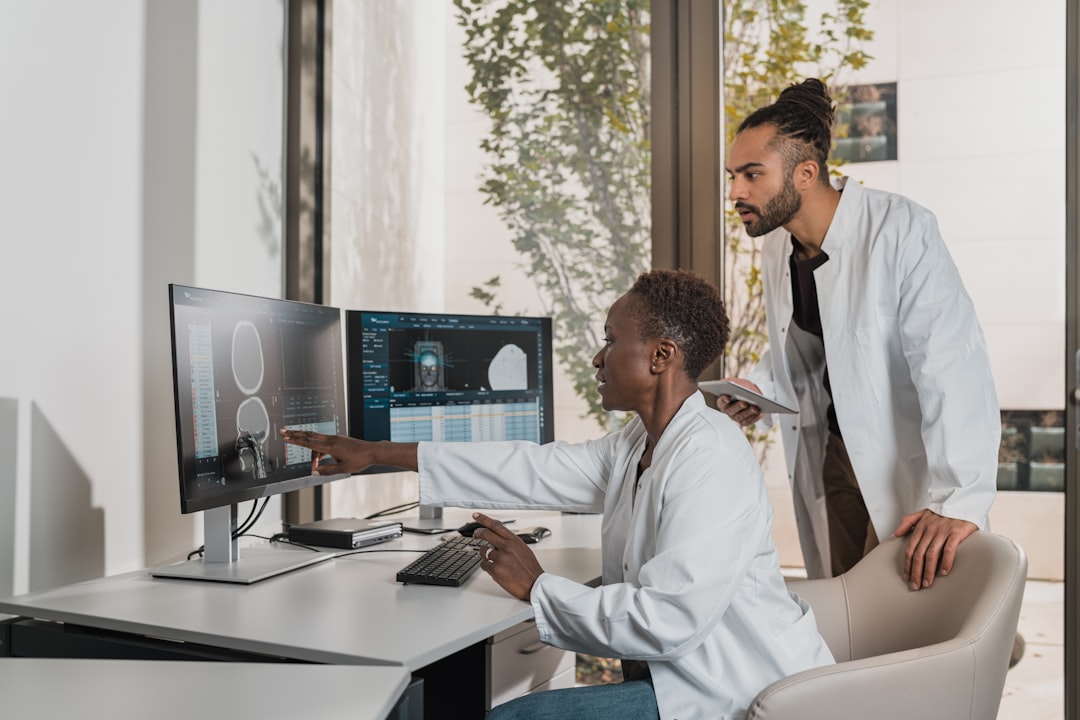
Many new coders start in adjacent healthcare roles — front desk, medical records, billing support — before landing a coding seat. MedicalBillingandCoding.org notes that professional organizations like AAPC and AHIMA offer job boards and employment resources, and that another option for those fresh out of school is to take the CPC exam right away, without the two years of recommended work experience, then enter the CPC Apprentice program. The apprenticeship label matters: you are credentialed before you are experienced, not the reverse.
CPC and CCS Occupy Different Floors
The difference between CPC and CCS is not prestige — it is venue. CPC, issued by AAPC, targets outpatient and physician-office coding: CPT, ICD-10-CM, HCPCS Level II. CCS, issued by AHIMA, targets inpatient and hospital records where ICD-10-PCS complexity lives. AHIMA describes coding specialists as professionals who create coded data hospitals and providers use to obtain reimbursement from insurance companies or government programs such as Medicare and Medicaid.
CCS demands more before the exam: one to two years of coding experience or related credentials, 107 questions across four hours at a Pearson VUE center. The exam costs $299 for AHIMA members and $399 for non-members. As of December 31, 2025, 36,925 professionals held CCS certification; the first-time pass rate hit 84% in 2025, up from 64% in 2023. CPC sits earlier on the path — exam fees run $400 for students and $425 for core attempts, plus roughly $70 annual AAPC membership, with total preparation commonly landing between $500 and $800 depending on coursework and code books.
Four Months to Fourteen Thousand Openings
How long does certification take? A focused candidate can move from zero to CPC-A in four to twelve months: roughly 80 to 120 hours of coursework, then a single high-stakes exam. The CPC-A designation stays until two years of verified coding experience — or approved substitutes like an 80-hour prep course and the Practicode module — convert the apprentice stamp to full CPC standing. CCS follows later, after we have actually coded inpatient charts, not before.
The labor market arithmetic supports the bet. Employment of medical records specialists is projected to grow 7% from 2024 to 2034 — much faster than the average for all occupations, per the BLS. O*NET confirms 194,800 employees in 2024 and roughly 14,200 projected job openings annually through 2034. That is not a gold rush. It is steady demand in a system that cannot stop generating claims.
What Starting Pay Actually Looks Like
Starting salary questions deserve median answers, not influencer ones. The BLS reports a 2024 median annual wage of $50,250 — $24.16 per hour — for medical records specialists. O*NET's 2025 figures sit at $51,140 annually, $24.59 per hour. The bottom tenth earned less than $35,780; the top tenth cleared $80,950. Certification widens that spread: uncredentialed coders cluster near the floor, while CPC holders and multi-credentialed specialists push toward the ceiling. The BLS top-decile figure — above $80,950 — is where a CPC-plus-CCS combination eventually lands, not where a fresh CPC-A starts.
Is medical coding a sensible career change in 2026? We are not entering a shrinking trade. We are entering a regulated translation job with predictable credential costs, measurable pass rates, and federal data confirming growth. The risk is not market collapse; it is underestimating the study hours and overestimating immediate remote freedom.
Remote Work Arrives on a Delay
Are medical coding jobs really remote? Eventually — rarely on day one. Outpatient coding can be performed from a home office once an employer trusts accuracy and HIPAA compliance. Most hiring patterns still demand six to twelve months on-site before unlocking remote eligibility. Entry-level remote CPC-A roles exist through revenue-cycle vendors, often at a modest discount to on-site pay — roughly 7% to 8% less in common salary comparisons — while mid-career remote coders with proven production rates approach parity. The remote label on a job posting is not a myth. It is a second-act arrangement, earned after someone else has watched you code without supervision.
We do not need a diploma to begin. We need a certificate, a code book updated to the current calendar year, and the tolerance for an exam that fails more people than the CCS pass-rate trend suggests it should. The rest is arithmetic: $50,250 median, 14,200 openings per year, four months to sit for CPC if we treat it like work instead of a hobby. Pick up the code set. The degree can wait forever.