
Solar Panel Installer Career: 42% Growth, No Degree
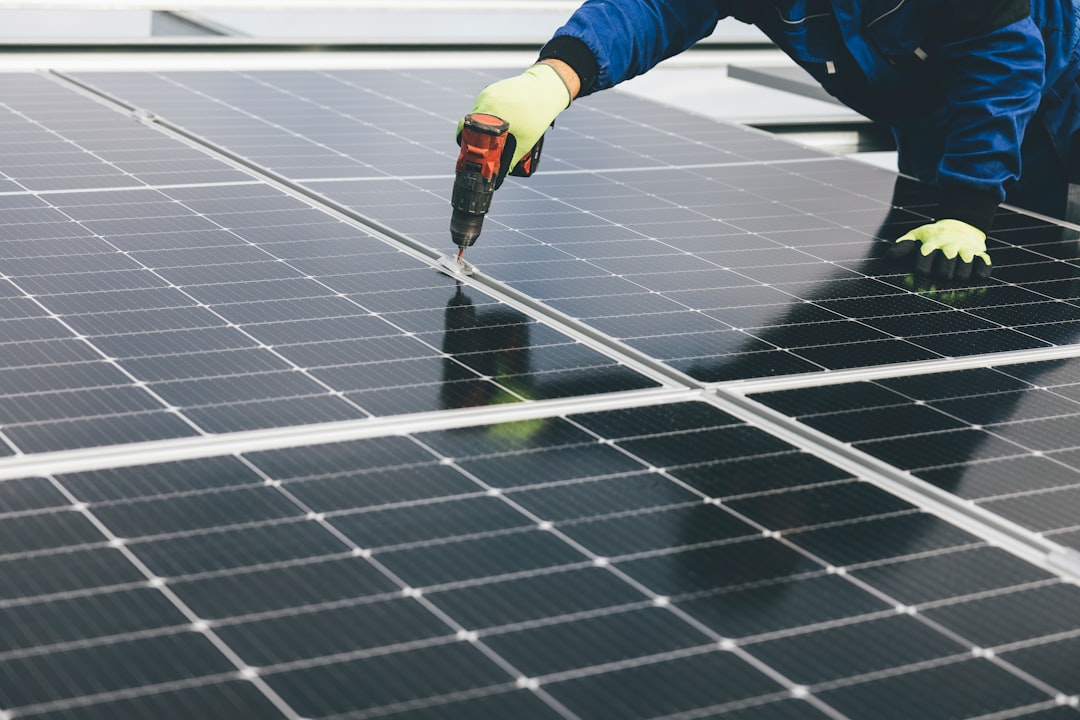
Forty-two percent. That is the projected employment growth for solar photovoltaic installers from 2024 to 2034 — fourteen times the 3% average for all occupations, according to the Bureau of Labor Statistics Occupational Outlook Handbook. We keep calling this a renewable energy career, as though the panels float. They do not. We mount them on roofs, run conduit, wire inverters, and pass inspections. The work is construction with a photovoltaic substrate, and the labor market has noticed.
The median annual wage was $51,860 in May 2024 — $24.93 per hour, per O*NET Online. No bachelor's degree. High school diploma or equivalent. Moderate-term on-the-job training, typically up to one year. That is the official entry profile, and it contradicts the assumption that technical careers require a four-year credential we cannot afford or do not want.
Entry Without Experience Is a Helper Economy, Not a Gate
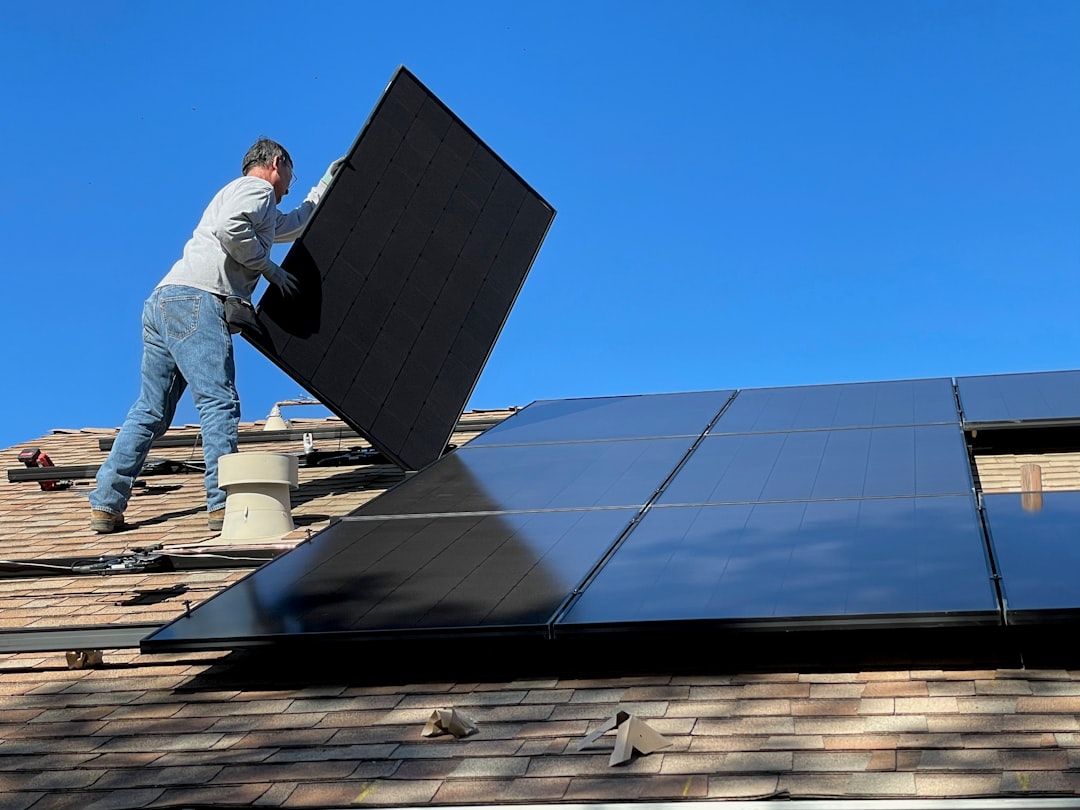
Becoming a solar panel installer with zero background does not begin with certification. It begins as a helper on a crew — carrying modules, learning fall protection, watching an experienced installer terminate a homerun. The BLS lists no formal education beyond high school and notes that employers provide on-the-job training. About 4,100 openings are projected each year through 2034, driven by growth and replacement as workers transfer out or retire.
GRID Alternatives runs a 200-hour, five-week Installation Basics Training program at no cost — no prior experience required. Graduates receive OSHA-10 construction safety certification and CPR/First Aid training. The curriculum aligns with NABCEP's PV Installer Specialist Job Task Analysis. That is one path from unemployed to employable in roughly a month of structured training, not four years of tuition.
O*NET data shows the split: 34% of employers require only a high school diploma; 37% want a post-secondary certificate. The certificate is a salary signal, not a legal prerequisite in most states.
The Salary Ladder Runs $32,000 to $115,000
The BLS median of $51,860 sits at the center of a wide band. The lowest 10% earned under $39,070; the highest 10% exceeded $80,150 in May 2024. That spread is not random — it tracks credential, electrical licensing, and crew leadership.
According to SurgePV's NABCEP Certification Guide 2026, non-certified installers typically earn $30,000–$40,000. NABCEP PV Installation Professional holders land in the $70,000–$85,000 range. Add an electrical license and the band stretches to $85,000–$115,000. NABCEP's own research, cited by SurgePV, puts the certification premium at $11,000 per year — a 26% increase. Seventy percent of professionals who passed the exam reported a higher salary afterward.
We are not discussing a single salary for 2026. We are discussing a tiered market where the median is the midpoint of a profession still sorting itself by skill density.
NABCEP Is the Credential That Separates Labor from Authority
NABCEP certification is voluntary for employment in most jurisdictions. It is not voluntary for career velocity. The North American Board of Certified Energy Practitioners charges $150 total for the entry-level PV Associate credential ($25 application plus $125 exam). The PV Installation Professional board certification costs $500 ($125 application plus $375 exam). Recertification runs $390 every three years for PVIP holders.
The PVIP exam delivers 70 questions over four hours. Passing requires a scaled score of 70. Most candidates need 100–150 study hours. Sixty percent of EPC firms consider NABCEP board certifications "essential" or "very important" for hiring decisions. The exam is not trivia — it validates competence in design, installation, commissioning, and maintenance at a decision-making level.
Board certification also requires documented installation experience, 58 hours of advanced training, and OSHA 10 completion. The credential costs $500. The salary premium averages $11,000 annually. The arithmetic is blunt.
OSHA 10 Is the Safety Tax Every Serious Installer Pays
OSHA 10-Hour Construction Industry training is mandatory for NABCEP board certification eligibility. Most employers treat it as a baseline before you touch a roof. Online courses run $50–$100; in-person sessions cost $150–$200. Some employers cover it. Many do not. Either way, ten hours of safety instruction is the price of admission to a trade where fall hazards are structural, not hypothetical.
Training duration for the full career arc — helper to lead installer — typically spans one to two years of field work plus whatever certification hours you stack on top. The BLS caps formal on-the-job training at one year for entry; reaching PVIP eligibility with documented project credits takes longer because experience, not classroom time, is the binding constraint.
Battery Storage and the Industry Beneath the Occupation
The installer occupation grows 42%. The industry beneath it grows faster. BLS Economics Daily, published June 2026, projects solar electric power generation employment to grow 180.2% — 30,400 new jobs — from 2024 to 2034. Wind electric power generation adds another 81.4%. All four fastest-growing industries over that decade tie to renewable energy generation. Solar photovoltaic installers rank among the 20 fastest-growing occupations in the United States.
Battery storage installation is the emerging specialization within that expansion. Grid-tied PV is becoming table stakes; energy storage integration demands electricians who understand DC coupling, load management, and code compliance for lithium systems. NABCEP now offers an Energy Storage Installation Professional certification at the same $500 fee structure as PVIP. The niche pays because the failure modes — thermal runaway, improper disconnects — are expensive.
Is solar installation a good career? The data answers without sentiment. Employment rises from 28,600 in 2024 to a projected 40,600 by 2034 — 12,000 new positions. Median pay exceeds $51,000 with no degree required. Certification and electrical licensing push earnings into six figures. The occupation carries physical risk, seasonal weather exposure, and the ordinary instability of construction work. [Those costs are real and the growth projections assume policy continuity we cannot take for granted.]
We do not need permission from a university to enter a trade growing faster than almost anything else in the American labor market. We need a harness, an OSHA card, and the patience to accumulate project credits while the industry adds 12,000 jobs over the next decade. Pick up a module. The roof is hiring.