
How Can I Decorate the Outside of My Home on a Budget?
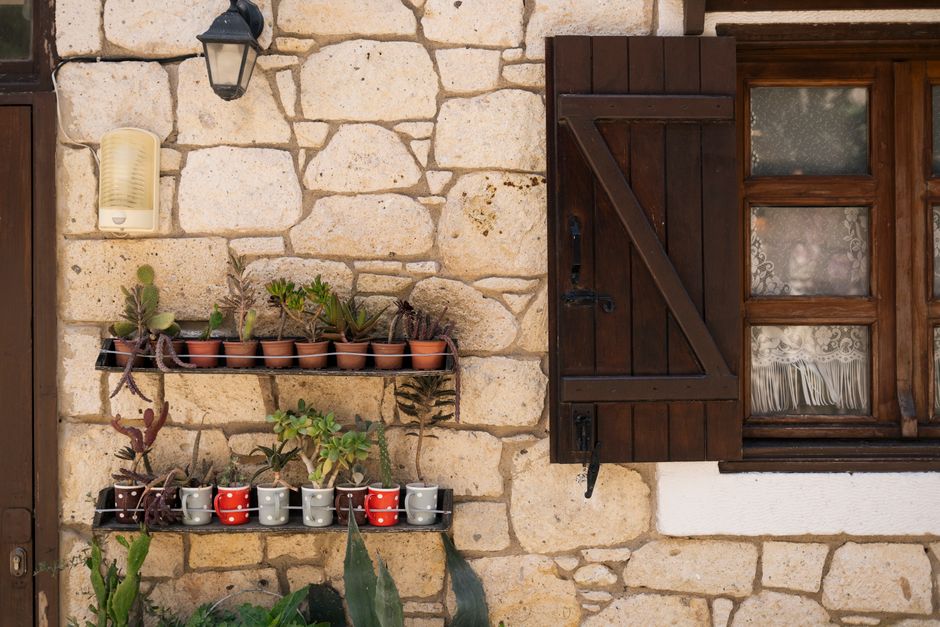
Decorate your home’s exterior on a budget by choosing one simple color palette, repeating it in a few well-placed accents, and working zone by zone: entry, porch, walls, and yard. Start with useful items such as a doormat, house numbers, coordinated planters, and outdoor lighting. Choose pieces that suit the weather and site, and leave enough space for plants and paths.
How can I decorate the outside of my home without spending a lot?
Spend first on small changes that do more than one job: define the entry, make the address easy to see, or bring color to a bare corner. A doormat, refreshed house numbers, and two planters in a shared color can create a sense of order without asking you to decorate every surface.
Plan before buying. The University of Minnesota Extension recommends weighing function, maintenance, environmental impact, cost-effectiveness, and visual appeal in sustainable landscape design. Its guidance also says to account for cost, labor, and time. That is a useful budget test: a low purchase price is less compelling if an item needs frequent upkeep or does not fit the space.
Work through the exterior in zones. At the entry, keep the door and walkway clear. On the porch, group a small number of useful accents instead of spreading objects across every ledge. On exterior walls, let the house itself remain the main feature; a well-placed light or a single hanging planter can add detail without competing with windows and trim. In the yard, use compact plantings or containers where ground space is limited.
For a small yard, restraint has practical value. University of Minnesota Extension explains that overcrowded plants compete for light and nutrients and can face greater disease pressure. Its advice is direct: “Fewer plants that are properly spaced will actually give you a better yield than squeezing many plants in the same space.” A few well-chosen containers can look fuller than a crowded line of struggling plants.
Make the budget work across the whole plan. Repeat an existing house color in the doormat or pots, then add one new accent color if the exterior needs contrast. If you are adding plants, match them to the available light, soil, and space. The same Extension guidance notes that putting the right plant in the right place helps avoid replacing plants that perform poorly in the wrong conditions.
What outdoor decorations make a house look more welcoming?
A welcoming exterior has a clear route to the door, a visible address, and a few repeated accents that make the entry feel cared for. A doormat, readable house numbers, coordinated planters, and thoughtfully placed lighting can provide those cues without taking over the porch.
Think of the entry as the focal point. Utah State University Extension’s landscape principles recommend using a focal point, such as a building or a bright flower bed, and repeating colors, textures, or plant forms to create continuity. As the Extension puts it, “Repetition of elements (colors, textures, plant form) in the landscape provides a feeling of continuity and helps lead the eye through the landscape.”
That principle can guide inexpensive choices. Echo the same planter color near the door and along a path, or repeat a plant form in a few containers. Repetition does not mean making every object identical; it means giving the eye a pattern to follow. A porch can feel composed with fewer objects when those objects share a color or shape.
Lighting can make an entry easier to read after dark. When choosing an exterior fixture, the U.S. Department of Energy’s Federal Energy Management Program provides minimum efficacy ratings in its June 2023 guidance, including 126 lumens per watt for outdoor wall-mounted luminaires and 112 lumens per watt for outdoor decorative pole- or arm-mounted luminaires. Those figures describe specific fixture categories, so check that a product’s category and rating match the intended use.
Safety belongs in the same decision. The U.S. Consumer Product Safety Commission warns that seasonal and decorative lighting without minimum wire size, sufficient strain relief, or overcurrent protection can present electrical-shock or fire hazards. The agency explains that these three characteristics are addressed in UL 588 and reduce those risks. Use lighting designed for its intended setting, and follow its product instructions.
How do I make exterior decorations match my home's style?
Make exterior decorations match by borrowing a few cues from the house—its existing colors, lines, and materials—and repeating them in a limited set of accents. Choose one focal point, then use consistent colors or plant forms to connect the entry, porch, walls, and yard.
Start with what is already there. Note the color of the door, trim, siding, and hard surfaces. Pick one or two of those colors for planters, a mat, or other small accents. A new contrasting color can work as a highlight, but using it in several places gives it a purpose. Too many unrelated colors make separate zones compete for attention.
Use shape as well as color. A house with strong straight lines can pair well with simple, clean-edged containers; a softer planting style can repeat rounded forms or leafy textures. This is a design choice, not a rule about what belongs on a particular home. Utah State University Extension’s guidance supports the broader idea: repeated colors, textures, or plant forms can help create continuity.
Let the site set limits. Check how much sun reaches each planting spot and how much room plants have to grow. University of Minnesota Extension advises matching plants to site conditions, including light, soil, and available space, to reduce stress and replacement. Its small-space guidance also points to compact plants, containers, and vertical features such as trellises as ways to use limited room.
Keep hard surfaces in the plan. Utah State University Extension notes that paths, screens, and lighting can add design while reducing the area that needs irrigation and maintenance. A clear path can link the yard to the porch; a screen can define a boundary; a suitable light can carry the entry palette into the evening. For a larger covered outdoor zone, see this guide to whether a permanent hard-top gazebo can stay outdoors.
Finally, check every item’s intended use and care instructions before placing it outside. The provided sources do not compare the lifespans of specific decor materials, so there is no evidence-based universal winner for rain and sun. Choose products labeled for outdoor use, place them where they will not obstruct doors or paths, and put away movable seasonal decorations when they are not needed. A restrained plan lasts in style because it relies on order, not on a pile of objects.
Frequently Asked Questions
What decorations can I put by my front door or on my porch?
A doormat, clear house numbers, a pair of coordinated planters, and suitable outdoor lighting can make an entry feel finished without crowding it. Keep the door’s path clear and choose items that suit the porch’s exposure to sun and rain.
How can I decorate a small front yard without making it look cluttered?
Use a few compact plants or containers, leave room between plants, and repeat one or two design elements. University of Minnesota Extension notes that crowding can increase competition for light and nutrients and disease pressure; vertical features can also make use of limited space.
Which outdoor decor materials hold up best in rain and sun?
The provided sources do not compare specific material lifespans, so there is no supported single best material. Check product labels for outdoor use and care instructions, and store movable decor when seasonal conditions warrant it. For decorative lighting, choose products with adequate wire size, strain relief, and overcurrent protection.
Sources
- University of Minnesota Extension: Gardening in Small Spaces
- Utah State University Extension: Landscape Design Principles
- University of Minnesota Extension: Lawns and Landscapes in Minnesota
- U.S. Department of Energy, Federal Energy Management Program: Purchasing Energy-Efficient Exterior Lighting
- U.S. Consumer Product Safety Commission: Seasonal and Decorative Lighting Products
Keep reading

Choose a Clearance Lawn Mower That Fits Your Lawn and Budget
Use this checklist to judge a clearance lawn mower by fit, condition, safety, warranty, and ownership costs before the discount wins you over.
What Kills Lawn Weeds Without Killing Grass, Pets, or Garden Plants?
Identify lawn weeds, choose turf-safe control, and avoid damage to pets, vegetable beds, and nearby garden plants.
Can I Fit a 6m x 4m Pergola in My UK Garden?
Check usable space, boundary height limits and permitted-development rules before fitting a 6m x 4m pergola in an English garden.

How Do I Find Landscaping Services in My Area?
Find local landscaping services, check climate and water-rule knowledge, and prepare a clear project brief before requesting estimates.